| Catalog |
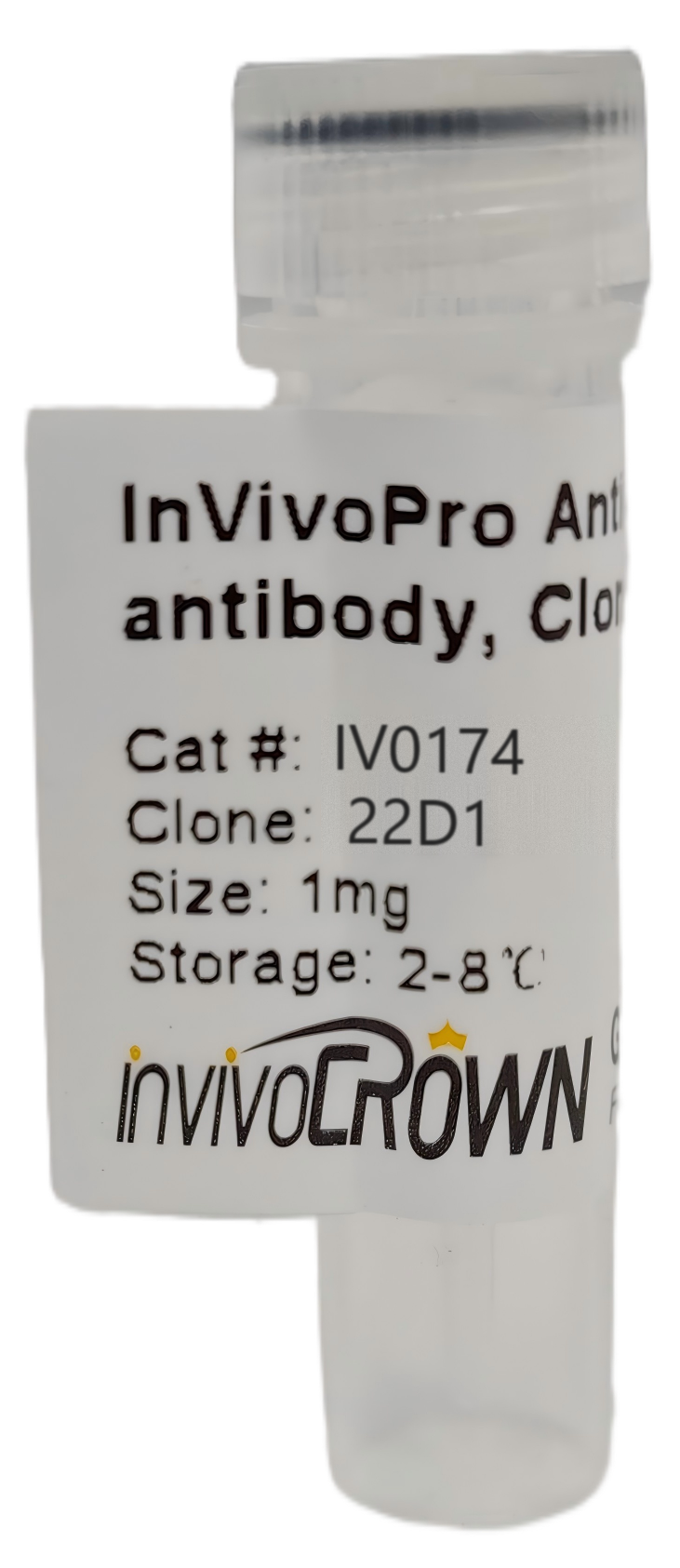
IV0174 |
| Product Name |
InVivoPro Anti-Mouse CD209b(SIGN-R1) in vivo antibody,
Clone 22D1 |
| Size |
1mg/5mg/25mg/50mg/100mg |
| Isotype |
Armenian Hamster IgG |
| Clone |
22D1 |
| Target |
CD209b |
| Other Names |
CD209b,SIGN-R1 |
| Isotype Control Catalog Code |
Armenian Hamster IgG Isotype Control |
| Dilution Buffer |
PBS, pH 7.2, contains no stabilizers or preservatives |
| Reactivity |
Mouse |
| Host Species |
Armenian Hamster |
| How much antibody to use in vivo |
Each investigator should determine their own optimal working dilution for specific applications. |
| Background |
CD209b, also known as SIGN-R1, is a 37 kDa type II transmembrane C-type lectin receptor. CD209b is expressed on the surface of splenic marginal zone and lymph node medullary macrophages and is commonly used as a marker for these cells. The CD209b protein is involved in the innate immune response, it binds to and initiates uptake of various microorganisms by recognizing high-mannose-containing glycoproteins on their envelopes. The 22D1 monoclonal antibody reacts with mouse CD209b. |
| Applications |
In vivo CD209b blockade |
| Purification |
protein A or G |
| Storage |
This antibody is stable for at least 2 months when stored at 2-8°C. For long term storage, aliquot in working volumes without diluting and store at -20°C or -80°C. Avoid repeated freeze thaw cycles. |
| Shipping |
2-8°C with blue ice |
| Concentration |
Lot specific |
| Shelf Life |
12 months from the date of receipt if stored as recommended |
| Formulation |
PBS Buffer, PH 7.2, with no carrier protein, or preservatives. |
| Sterility |
0.2 μM filtered |
| Endotoxin |
≤ 1.0 EU/mg, by the LAL method |
| Purity |
99% |